New Year’s Eve 1899–1900
The Year-End Revels
In [Stanislaviv](entity:location-recall-location-a4501b28cd29), [Stefania Tchornenko](entity:character-recall-character-stefania-tchornenko-25d1f3669c23) describes a winter crowded with dances, concerts, and costume balls. [Adèle Anger](entity:character-recall-character-ad-le-anger-7d8a1ec9bf62) loves society and brings Stefania along, while [Petro](entity:character-recall-character-petro-9da434a81731) stays away; the maid attends because she cannot bear to leave her mistress alone.
Against the bustle, Stefania recalls reports of sacred objects mysteriously vanishing from churches and synagogues across [Galicia](entity:location-recall-location-c547828ba2f6). Their disappearance feeds her conviction that the world itself is nearing some immense, unknowable awakening.
Early January 1900
The Prodigy’s Concert
Adèle takes Stefania to hear the child pianist [Raoul Koczalski](entity:character-recall-character-raoul-koczalski-9d8af8eac24c). His virtuosity overwhelms Stefania, who feels insignificant before the beauty of the music, even as she compares the instrument’s obedience to her own imagined command over a mandolin while cooking.
The concert reinforces the novel’s recurring tension between wonder and explanation: Stefania is drawn to marvels, yet instinctively searches for the mechanism behind them.
Early January 1900, at Ernest Thorn’s Stanislaviv performance
Thorn’s Apparition
At [Ernest Thorn](entity:character-recall-character-ernest-thorn-e51b219cdf47)’s illusion show, the audience waits impatiently before a Chinese pagoda. Thorn seems to materialize onstage without entering; Stefania believes she sees the trick, suspecting that a patterned silk cloth made him blend into the scenery.
The performance proceeds through transformations: rag-filled figures become dancers, a contortionist is boxed away, and a child seems to age into a dying old woman. The spectacle leaves the audience stunned, and Stefania’s confidence that every marvel has a visible explanation begins to falter.
September 28, 1868, recalled in the early chapters
The Fire That Bound Them
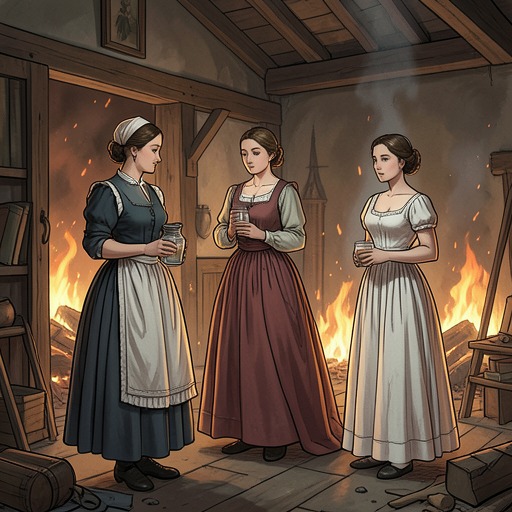
A fire that began while jam was being prepared in the Lothringer garden consumed half the town. It killed [Thérèse Anger](entity:character-recall-character-th-r-se-anger-490d6755faae) and Stefania’s parents; the two little girls, Adèle and Stefania, survived and were returned together to [Docteur Anger](entity:character-recall-character-docteur-anger-726dbebfee24), wrapped in soot-stained cloth.
For more than twenty years, Docteur Anger relives the blaze in nightmares, waking with cries that sound like sirens, owls, or locomotives. His trauma shapes the household’s silence about jam and the girls’ childhood bond, while Stefania’s memories of the lost home and parents remain painfully incomplete.
After the 1868 fire and throughout their childhood
Two Girls in One Household
[Docteur Anger](entity:character-recall-character-docteur-anger-726dbebfee24) raises Adèle and Stefania together after the fire. Adèle is delicate, pale, and indulged; Stefania is sturdy, dark-haired, and assigned the work of caring for her. They grow up inseparable, sharing rooms and routines, while Stefania’s attachment becomes a consuming form of love and dependence.
Stefania sometimes imagines that Docteur Anger might secretly be her father, but recognizes the fantasy as absurd. She nevertheless longs for a place in the family equal to Adèle’s, a desire that will shape her jealousy, loyalty, and sense of self.
Before Docteur Anger settled in Stanislaviv
The Soapmaker’s Son
Doctor Anger's father, a Swabian settler from Xinchun (near [Stanislaviv](entity:location-recall-location-a4501b28cd29)), experiments in Stanislaviv with making soap from oil and water. He delights in the transformation but cannot persuade customers to pay more for his fragrant, carefully made product than for cheap
Before Stefania’s childhood, recalled in the early chapters
The Doctor’s Lost Family
[Docteur Anger](entity:character-recall-character-docteur-anger-726dbebfee24)’s beloved wife, Thérèse, had struggled with infertility and died in the 1868 fire. He memorialized her through [Petro](entity:character-recall-character-petro-9da434a81731)’s marble sculpture, which presents her asleep in peaceful repose beside a grieving angel.
Petro’s work seems to Stefania to release living forms from stone, and the doctor repeatedly visits the sculptor as the marble image emerges. His grief and his daughter’s vulnerability help explain why he draws Stefania so deeply into the household—and why his deathbed words will carry such power over her.
During Adèle and Stefania’s youth
Petro Enters the Household
After [Docteur Anger](entity:character-recall-character-docteur-anger-726dbebfee24) commissions Thérèse’s monument, [Petro](entity:character-recall-character-petro-9da434a81731) becomes a frequent visitor. Adèle prepares delicacies and dresses carefully for his visits, while Stefania watches her own jealousy grow and retreats to the lilacs when the couple’s courtship makes her feel displaced.
Petro eventually marries Adèle and builds their elaborate villa in place of the old house. Stefania joins their honeymoon in [Kraków](entity:location-recall-location-d7d3402420b5), [Budapest](entity:location-recall-location-efd6a1abf62c), and [Vienna](entity:location-recall-location-8daae28d814e), continuing to manage Adèle’s clothes and comforts even as Petro tries to establish a life with his wife apart from her maid.
During the honeymoon in Budapest
A Honeymoon Apart
At the [Budapest](entity:location-recall-location-efd6a1abf62c) baths, Adèle tells Stefania that [Petro](entity:character-recall-character-petro-9da434a81731) has asked her to meet him in another room without her maid. Stefania endures the separation outwardly, then wanders alone through the baths, disturbed by unwanted underwater touches and a sculpture of Leda and the swan.
Later, at [Vienna](entity:location-recall-location-8daae28d814e)’s Prater, Stefania leaves the couple and stands by a small canal. She understands that she can keep loving Adèle without possessing her: “I flow and I love Adèle.” Returning to the hotel, she accepts that Petro now has authority over who may be close to his wife.
After Adèle and Petro’s marriage
The House of Stone and Glass
[Petro](entity:character-recall-character-petro-9da434a81731) builds a fantastical villa on Lindengasse, ornamented with colored ceramic tiles, unusual forms, and a glass ceiling like a map of the stars. Stefania sees it as a palace beneath the sea or a sunken vessel, seeming to float rather than obey the ordinary laws of buildings.
On the roof sits Petro’s carved [Stone Woman in the Attic](entity:object-recall-object-6e0fad51ddcc), a figure with arms extended and a hollowed back. The house becomes both a public curiosity and a private refuge, embodying Petro’s belief that objects can carry thought and feeling.
Before 1900, shortly before Docteur Anger’s death
The Doctor’s Deathbed Charge
As [Docteur Anger](entity:character-recall-character-docteur-anger-726dbebfee24) lies dying, he tells Stefania that she and Adèle are like trees whose trunks have become entwined, and that she must serve Adèle. Stefania hears this as a binding instruction, though later evidence will reveal that the doctor’s intended meaning was more complicated.
The command becomes the organizing rule of her life. She interprets routine labor, self-denial, and the preservation of Adèle’s comfort as a sacred duty, even when that obedience causes her pain.
June 1900
The Flooded House
Weeks of relentless rain flood the garden and threaten [Petro](entity:character-recall-character-petro-9da434a81731) and Adèle’s house. Water rises around the villa, turning its surroundings into an open pool; Petro and Stefania joke grimly about catching fish in the buckets placed beneath leaks.
Reports from across the region describe drowned animals, ruined bridges, submerged railway lines, and people stranded on rooftops. The flood gives physical form to Stefania’s sense that the world is unstable and that the household itself may drift away.
June 1900, during the flood
The Fish Market Encounter
Stefania rides through flooded streets to buy tench for a meal honoring the newly arrived priest. At the market she meets [Velvele](entity:character-recall-character-velvele-65b4d4cea16b), a young fish seller whose gaze leaves her cold, confused, and unable to act with her usual confidence.
Velvele selects four fish and asks whether he should kill them; Stefania declines, then falls in the mud as they escape their sack. His quiet assistance deepens the strange impression he has made on her, and she returns home humiliated and unsettled.
June 1900, the day after Stefania meets Velvele
The Tench Dinner
After dreaming of [Velvele](entity:character-recall-character-velvele-65b4d4cea16b), Stefania kills and prepares the tench, first having grown attached to the fish as living companions. At breakfast, Adèle insists that Stefania has failed to prepare the household in time and orders her to buy fresh bread.
At the formal meal, Stefania discovers that [Petro](entity:character-recall-character-petro-9da434a81731) does not eat fish and never has, although she went to great trouble to obtain and cook it. Overwhelmed by the wasted labor and feeling unseen, she throws the fish into the floodwaters. The gesture breaks the table’s polite order and makes her resentment visible.
June 1900, before Père Josef’s first dinner
The Chamber-Pot Outburst
After Adèle complains that Stefania woke too late and failed to make fresh bread, Stefania descends the stairs carrying their chamber pots. Her anger, long swallowed in obedience, erupts: she hurls both pots, spilling their contents across the floor, then tells Adèle to find another servant.
The confrontation exposes the violence buried inside their intimate routine. Stefania nearly pushes Adèle down the stairs, but love and the memory of their shared childhood arrest her; she collapses into tears and lists the endless work she performs for the household.
June 1900, at the dinner after the flood
Josef Returns as a Priest
Father Joseph brought his young wife, [Ivanka](entity:character-recall-character-ivanka-c182ea677ba2). Stephanie recognized him as Joseph Reddy, who had once been a medical student of Doctor Anger and was the clumsy young man who had silently loved her. His appearance had changed, and he was now full of compassion, which made her restless; Adele
Several years before 1900
Josef’s Student Years
Stephanie remembered that Joseph Redney, still a medical student, often visited the Anger family. He was deeply focused on the nervous system, hypnosis, and whether religious miracles might be possible through suggestion. Dr. Anger respected his intelligence, but Adel mocked his clumsiness and prominent
During Josef’s student years
The Lamp Fire
One evening, Joseph carried a kerosene lamp and followed Stefania into the dark attic, trying to help her find a book. The lamp slipped from his hand and broke, setting fire to both his pants and Stefania's skirt. Joseph tried to put out the flames and reached for her
Late May, during Josef’s student years
The Pond Accident
Stephanie and Adele were rowing in the Romashkan Pond. Following Adele's command, Stephanie rowed the boat toward the shore so they could wave hello to Joseph. When Joseph helped them get off the boat, he slipped on the slippery shore and fell, pulling Stephanie into the
During Josef’s student years, after the pond accident
The False Proposal
Adele told Stefania that Joseph was wearing formal clothes, carrying white chrysanthemums, and came to propose. Stefania was terrified and hid in the doctor Anger's closet, asking Adele to say she was not at home
August 1900
The Prison Yard Confession
After a quarrel at home, Stephanie brought homemade pastries to the prison chapel where Father Joseph served. The soldiers mocked her and took her food, and she became furious, rushing forward to attack them; Joseph stepped in, using his body to protect her and deflect their swords
During Stefania and Adèle’s childhood
The Tissot Watch Accusation
At the Queen Heidi Girls' School, Stephanie placed the Tissot pocket watch that Dr. Anger cherished in her pocket, believing the warmth of the watch carried her love for him. Adelle and other girls accused her of stealing it, and Sister Apollinaria took her back to Ang
August 1900, after Stefania’s confession
The Prisoners’ Song
After Stephanie finished, Father Joseph had her recite the Creed and muster the strength to forgive Adele, also seeking his own forgiveness. He admitted he understood how difficult it was to bear such pain. His words made Stephanie feel understood, not judged. An old prison guard led her to a wall
August 1900, at Petro’s prison workshop
The Stone Angel Appears
In the workshop, [Petro](entity:character-recall-character-petro-9da434a81731) slept next to a living beautiful child, the child dressed in angelic clothing. Everyone thought a marble angel had come back to life; when people reached out to grab it, the child disappeared under a cloth. Stefania found him hidden under a black top hat at the door
August 1900, immediately after the angel’s appearance
A Child Without a Name
The boy does not speak, is severely undernourished, and resists ordinary bathing and dressing. The doctor confirmed he is neither deaf nor mute, and found his joints unusually flexible, yet could not explain the reason; the doctor suggested consulting experts in [Kraków](entity:location-recall-location-d7d3402420b5) or [Vienna](entity:location-recall-location-8daae28d814e) for treatment
August 19, 1900, during the emperor’s birthday celebrations
Felix’s First Name
When [Stanislaviv](entity:location-recall-location-a4501b28cd29) celebrated the 70th birthday of Franz Joseph, Peter, Adel, and Stefania took their child through the crowd. Someone asked them what name they had given their child. Peter looked at the festive slogan "Let others go to war, happy Austria, go to
Late summer 1900
The Map in the Atlas
[Felix](entity:character-recall-character-felix-33946d026036) kept drawing constantly: plant cross-sections, machines, houses, and the streets and shops of [Stanislaviv](entity:location-recall-location-a4501b28cd29). Stefania found him drawing all over the Rokitansky's "Atlas of Anatomy" by Dr. Anger, and she hit him angrily because he had ruined the
Early autumn 1900
Thorn’s Family Claim
Ernest Sorn came to the villa, searching for [Felix](entity:character-recall-character-felix-33946d026036) in the kitchen, and told Adel and [Petro](entity:character-recall-character-petro-9da434a81731) that he knew the boy's past in the touring theater. He said the child was his son, with a mother named Mu, a martial artist. He also described the child's illness and
Late summer through autumn 1900
Felix’s Hidden Life
[Felix](entity:character-recall-character-felix-33946d026036) hides for several hours in the pot, cabinet, box, and roof space; sometimes he disappears for days. Stephanie searches frantically everywhere, scolding him, and the fact that he is missing has become unbearable for her; once, she found him curled up in the stone sculpture woman's
Autumn 1900
Felix and Petro at Work
[Felix](entity:character-recall-character-felix-33946d026036) began to watch [Petro](entity:character-recall-character-petro-9da434a81731) sculpt. Soon he would pass him the tools, collect the stone dust, dust the statue, even take the burning cigarette from Petro's mouth. Stefania watched from the side, happy that Felix had found someone he could get close to, yet jealous that Petro had drawn
Autumn 1900, after Felix has begun living with the Skolyks
The Threat of Removal
The police commissioner warns the household that investigators may come from Lviv and [Vienna](entity:location-recall-location-8daae28d814e) because Thorn is suspected of fraud and the thefts of sacred objects. The authorities may take [Felix](entity:character-recall-character-felix-33946d026036), whom they believe could have been trained to slip into churches and steal.
[Petro](entity:character-recall-character-petro-9da434a81731) orders Stefania to feed the boy continuously. She and Petro force him to eat rich food for two weeks, until he grows too plump to fit into the magician’s hat or the household’s narrow hiding places. When gendarmes arrive, Petro demonstrates that Felix cannot be concealed in either, and the frustrated officers leave without him.
Autumn 1900
The Watchful Synagogue Household
Stefania visits the Baumel family with [Felix](entity:character-recall-character-felix-33946d026036) to have a suit made for him. The family discusses the theft of Jewish sacred objects and fears that the disappearances are a sinister sign; Mordehaï Baumel worries that Felix’s flexibility connects him to Thorn’s crimes.
In the kitchen, Stefania hears that [Velvele](entity:character-recall-character-velvele-65b4d4cea16b) is expected to marry, though he dreams of crossing the ocean. When he speaks to her afterward, he challenges her life of unpaid service and asks whether a person should first learn to love herself. Stefania rejects his judgment and leaves, insisting that he does not understand her obligations.
Childhood summers, recalled in autumn 1900
Stefania’s Memories of Dora
Stefania remembers summers in [Dora](entity:location-recall-location-8e71d93396cd) with Adèle, where they explored forests and mountain pastures, watched animals, and played in the wilderness with a dog named Joke. The girls' adventures gave Stefania a sense of bodily freedom and a world beyond domestic service
Autumn 1900, after the investigation is announced
The Relics Beneath the Statue
At the villa, Adèle's birthday celebration is held in the glass-and-wood pavilion in Elizabeth Queen Park. Guests praise Stefania's elaborate cooking while [Felix](entity:character-recall-character-felix-33946d026036) sketches them; Adèle appears unusually devout and withdrawn, and Father Josef attends with [Ivanka](entity:character-recall-character-ivanka-c182ea677ba2)
Immediately after the birthday accusation
The Doctor’s Letter
Stefania retreats to her room convinced that Adèle will dismiss her and that she has become a murderer. Adèle returns and strikes her, then reveals that [Ivanka](entity:character-recall-character-ivanka-c182ea677ba2) is alive; she had suffered a seizure, and Adèle used her knowledge as a doctor’s daughter to help her.
Adèle explains that the supposed embrace was a prayer for her pregnancy. The bas Stefania saw Josef carrying were meant as a gift for Ivanka, which he had refused and returned. The revelations dismantle Stefania’s interpretation, but they do not erase the strain between the women or the years of jealousy beneath it.
After Adèle’s birthday, before the fire
The Lost Meaning of Service
Stefania searches Adèle’s private journals for proof of the affair and instead finds entries revealing old resentment: Adèle had sometimes wanted her gone and felt that her father loved Stefania as much as he loved his own daughter. The discovery unsettles Stefania’s belief that she has always understood their bond.
She also finds [Docteur Anger](entity:character-recall-character-docteur-anger-726dbebfee24)’s letter to a pastor. He admits that he made a mistake by leaving the girls to shape one another, that their trunks have become entwined, and that Stefania should leave Adèle and be taken into the pastor’s household. His deathbed instruction, remembered by Stefania as “serve Adèle,” had been the opposite of what he intended.
August–November 1900, reconsidered after the birthday
Josef’s Compassion Misread
Stefania had taken Josef’s tenderness as proof that he loved her romantically. She replays their encounters and recognizes that the same compassion appears in his treatment of prisoners, beggars, and his wife; his warmth was not a private declaration but a consistent form of care.
The realization humiliates and wounds her, especially because she feels that Josef’s spiritual presence has displaced Adèle as the center of her life. Her fantasy of mutual love had offered a new meaning beyond servitude, and its collapse leaves her feeling utterly alone.
November 1900, after the birthday gathering
The Invitation to Begin Again
[Velvele](entity:character-recall-character-velvele-65b4d4cea16b) waits outside Stefania’s home and offers her a partnership: they could travel to the [Nouveau Monde](entity:location-recall-location-nouveau-monde-e39914f90312), open a restaurant, and build a life around his commercial instincts and her cooking. He has already bought two third-class tickets on the Taormina, scheduled to sail from [Hambourg](entity:location-recall-location-hambourg-ba9ffd247140) in March.
Stefania refuses, denies that she is the woman he describes, and says she will marry in spring. His offer gives her a concrete escape from the household, but she cannot yet imagine choosing a life outside the roles that bind her to Adèle, [Petro](entity:character-recall-character-petro-9da434a81731), [Felix](entity:character-recall-character-felix-33946d026036), and the memory of [Docteur Anger](entity:character-recall-character-docteur-anger-726dbebfee24).
November 1900, on the eve of Adèle’s birthday
Josef’s Love for Adèle
On the day before Adèle’s birthday, [Père Josef](entity:character-recall-character-p-re-josef-42a77a168e36) arrives at the villa. Stefania expects him to confess his love to her, but sees him embrace Adèle through the colored glass ceiling; Adèle weeps and smiles, and Josef gives her a small bundle.
Stefania later finds Adèle’s silver-gray stockings with a gold thread in the drawer and interprets them as evidence of an affair. In fact, Josef had been returning them after Adèle tried to send them to [Ivanka](entity:character-recall-character-ivanka-c182ea677ba2). The scene sharpens the distinction between what Stefania sees and what she wants to believe.
November 1900, the morning after Adèle’s birthday
The Birthday Revelation
Stefania searches Adèle’s belongings for the extent of her supposed affair with Josef, finding journals and the letter from [Docteur Anger](entity:character-recall-character-docteur-anger-726dbebfee24) to the pastor. The letter reveals that the doctor meant Stefania to leave the household, not devote her life to serving Adèle.
The discovery forces Stefania to face how thoroughly she has built her identity around a misunderstood command. She remains in the house, however, and the revelation arrives too late to undo the years of dependence and resentment.
November 1900, at Adèle’s birthday celebration
The Birthday Dinner
Adèle’s birthday feast fills the park pavilion with guests, music, and Stefania’s carefully prepared dishes. [Petro](entity:character-recall-character-petro-9da434a81731) offers a toast, [Felix](entity:character-recall-character-felix-33946d026036) draws the company, and the guests lavish praise on the food. Stefania stands apart in her role as servant, carrying dishes and watching the people she loves form a world that seems to have no place for her.
Drunk and overwhelmed, she announces that Adèle and [Père Josef](entity:character-recall-character-p-re-josef-42a77a168e36) are lovers. Her accusation turns the hidden tensions into a public scandal; Adèle calls her a liar, Petro is horrified, and the guests demand punishment. [Ivanka](entity:character-recall-character-ivanka-c182ea677ba2) suddenly collapses, appearing to die before the party’s stunned company.
The night after the birthday celebration
The Final Misunderstanding
Alone at home, Stefania believes she has killed [Ivanka](entity:character-recall-character-ivanka-c182ea677ba2) and ruined Adèle’s life. Adèle arrives and reveals that Ivanka survived the seizure; Stefania’s announcement was not a revelation of an affair but a disastrous misinterpretation of prayer, pregnancy, and the returned stockings.
Adèle admits that she has long feared Stefania’s judgment and resented the unequal, tangled roles they inherited from [Docteur Anger](entity:character-recall-character-docteur-anger-726dbebfee24). Stefania insists that he never loved her, but her certainty is shaken by the letter she has read and the life she has built around his words.
Near the novel’s ending, after the birthday celebration
The Fire Returns
During the argument, Stefania makes a sudden movement and the kerosene lamp breaks. Fire catches the tablecloth and spreads through the salon, blocking the exit as smoke fills the house. Stefania tries to protect Adèle, who may be pregnant, and imagines the family’s future as rescue workers close in.
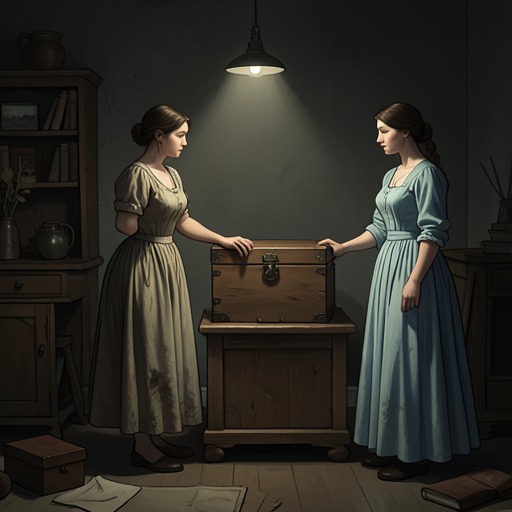
[Felix](entity:character-recall-character-felix-33946d026036) reaches the front door and works at the lock. The roof collapses; colored glass falls into the burning room, and the Stone Woman crashes down beside the women. From the statue’s hollow jar spill the sacred objects stolen from churches and synagogues, along with the dragon comb and [Docteur Anger](entity:character-recall-character-docteur-anger-726dbebfee24)’s Tissot watch.
At the moment the roof collapses
The Relics Revealed
The fire exposes the secret of the missing religious treasures: the objects emerge from the hollow Stone Woman’s vessel and lie scattered in the flames. The pattern of thefts that had seemed supernatural was connected to an ingenious hiding place in [Petro](entity:character-recall-character-petro-9da434a81731)’s sculptural world.
The watch also appears, and Stefania realizes [Felix](entity:character-recall-character-felix-33946d026036) had taken it from her hidden pocket near her heart. Its disappearance frees her from the symbolic burden she had carried since childhood: the belief that [Docteur Anger](entity:character-recall-character-docteur-anger-726dbebfee24)’s love was enclosed in the object and that she had to earn her place through service.
The final moments of the novel
The Illusionist’s Last Lesson
As smoke and fire overwhelm the house, Stefania understands that she has spent her life as her own illusionist, making the world fit the story she needed. She sees that people notice what they want to see, and that the order she trusted was sustained by illusions and selective attention.
The watch’s caged bird becomes the image of release: with the object gone, Stefania feels lighter. The ending leaves her fate and the household’s survival uncertain, while her sudden lucidity breaks the spell of unquestioned service and reveals the fragility beneath the novel’s supposed “happy Austria.”